We All Deserve the Right to Want the Best for Our Children

We all deserve the right to want the best available for our children.
I want my child to be safe, loved, understood, gently challenged, emotionally supported and surrounded by people who see her properly. I want her early education to feel warm and thoughtful, with enough space for play, enough calm for security, and enough attention for her to grow without being pushed.
I consider myself very privileged.
I have a healthy child. I live in one of the most socio-economically developed cities, in a beautiful house, doing the thing I am passionate about, with a supporting family around me. I have access to information, healthcare, transport, books, internet, advice and choices.
That last word is important, because much of what we call parenting anxiety in privileged settings is actually the anxiety of choosing between good options.
I do measure pre-school against pre-school based on standards of mine.
When I look at a school, I notice the atmosphere, the teachers, the garden, the rhythm of the day, the language environment, the children already there and the feeling I get when I walk into the room. I wonder whether my child will be comfortable, whether she will be emotionally held, whether she will have enough freedom without being left alone inside it, and whether the place will understand that a small child is not a productivity project with shoes.
There is nothing wrong with wanting that.
Parents should want good things for their children, and I do not think we need to apologise for caring about the quality of early education. A classroom is not just a room where children are kept until pickup time. Its atmosphere, the teacher’s tone, the way books are offered, the amount of space to move, and the quiet daily moments of being spoken to, comforted, guided and noticed all become part of a child’s first understanding of learning.
But sometimes I need to stop and just have a think.
Because those standards are not the standards of the global community of parents.
For many parents, the question is not whether the pre-school has a big enough garden or whether the classroom feels beautifully arranged.
The question is whether their child can get to any school at all. A family may want education deeply and still be blocked by transport costs, missing documents, unsafe routes, illness, disability, conflict, poverty, child labour, language barriers or the hidden costs that still surround schooling even when the education itself is officially described as free.
This collage of images we need to look at more closely, not toss aside because it's uncomfortable.
There are parents who cannot make it to school or pay for school in any realistic sense. Some cannot dream of high-quality education because they are still trying to access the basic version. Their children may have no infrastructure to take them to school, or they may be needed at home, or the family may not be able to afford the uniform, food, transport, materials and lost working time that school attendance requires. Other children are sick, displaced, undocumented, disabled, unsupported, or living in places where home-schooling is not an option but a fantasy from another economic universe.
The global figures are indeed difficult to look at without feeling some sensation of embarrasment for our issues. But all are real. However, ours might still give us space to help...

Recent UNESCO estimates put the number of children and young people out of school at 273 million in 2024, including 79 million children of primary-school age and 64 million adolescents of lower-secondary-school age.
These numbers are not made up of one simple story. Some children are excluded by poverty, distance, conflict, disability, documentation, poor school quality or several of these barriers pressing on the same family at once.
Sometimes there may be low trust in school, or a family may not see enough value in what a particular school offers. But very often, what looks like lack of interest from the outside is actually a family making an impossible calculation. A parent may value education and still choose food first. A child may want to learn and still be pulled into work. A girl may be ready for school but expected to marry, care for others or obey social rules that close the door early. A boy may be pushed towards earning money because the family needs help now, not in ten years.
Education can be free on paper and still unaffordable in real life.
Considering all these troubles around educaiton should change they way think about access.
A school existing somewhere is not the same as a child being able to reach it, enter it, stay in it, understand what is happening there, feel safe enough to return and receive enough support for learning to actually happen. Access is already broken when the road is unsafe, the bus fare is impossible, the uniform cannot be bought, the documents are missing, the school does not support disability, or the teaching quality leaves children failing year after year.
This is where inequality becomes painfully real.
Access often breaks in small moments, at things we take for granted and consider natural. And very often the parent facing these breakages wants school but cannot make all the pieces fit.
So while we ponder whether the new school for our kids will have a big enough garden, let’s also just stop for a second and take a look at the massive inequality in access to education.
Not because we should feel guilty for wanting the best for our own children.
The problem is not that some parents have high standards.
The problem is that so many parents are not allowed to have them.
Maybe those of us who have most of it, if not all, can make a little effort for this to change somehow.
I do not mean this in a grand heroic way.
I am always suspicious of speeches that sound as if someone is about to save the world before lunch. Change can be smaller, more practical and less shiny than that. It can mean putting a useful resource into the hands of a child who would not otherwise receive it, or supporting a school, library, tutor, family centre, NGO or community organisation already working close to families who face the barriers we like to discuss from a safe distance.
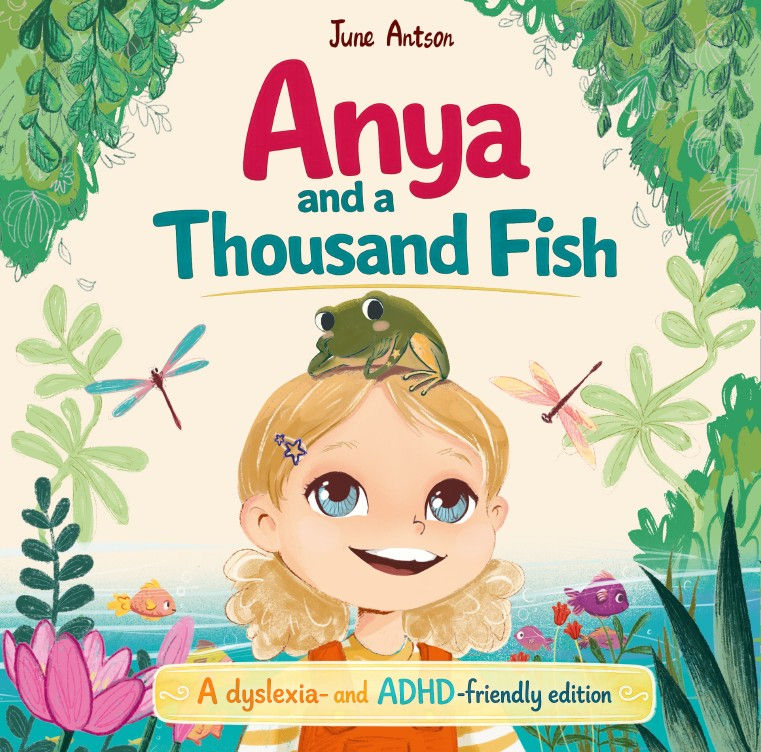
I wrote an accessible book.
I am working on a project to get it to families who would not receive support otherwise.
The book will not solve global education inequality. It will not rebuild schools, end poverty, remove conflict, train every teacher or repair every system that fails children. I know that. But it can still be one small, real thing. It can offer a gentler route into reading for a child who finds ordinary pages intimidating.
Tiny step in the big scheme of things.
But I might be able to help a handful of kids to have a better chance at learning.
See my special editions here: https://lnkd.in/dgYKV9m4
That is where it all starts.
Education is the protective eggshell allowing us to grow feathers and fly.


Comments