Helping Children Make Sense of an AI-Shaped World
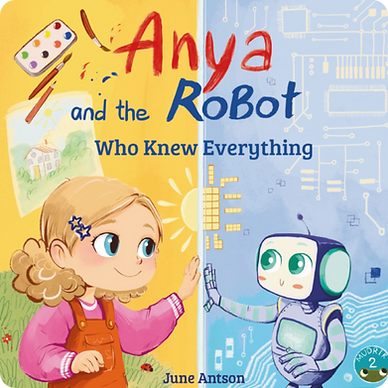
Discover a story that celebrates curiosity, imagination and independent ideas in an AI-shaped world
A picture book for children aged 6–8 exploring what it means to grow up around AI, and why observation, critical thinking, and individual creativity matter more than ever.
Now available on Amazon:

AI literacy for kids aged 6–8
Anya and the Robot Who Knew Everything introduces the Look–Think–Ask framework for helping children develop thoughtful habits around AI from an early age.

Look–Think–Ask is my framework for helping children pause before automatically accepting what technology tells them.
LOOK - What can I notice for myself?
THINK - What do I think?
ASK - Who or what can help me find out if the answer is right?
The framework helps children practise observation, questioning and verification while keeping their own judgement and curiosity at the centre.
Truth Detective Activities
Help children aged 5–8 practise one of the most important AI-literacy skills: checking before believing.
The free printable pack includes 4 activities that help children:
-
notice clues and question first impressions;
-
separate observation from assumption;
-
check whether information makes sense;
-
become more confident independent thinkers.
Free printable PDF · Ages 5–8

The Need for Early AI Literacy
Children aged 6–8 need a simple, age-appropriate mental model of what AI is and is not.
That AI learns patterns from information created or provided by people. It can generate answers, pictures and suggestions, but it has not lived in the world, had experiences or developed understanding in the way a person has.
Early AI literacy can help children recognise the difference between receiving an answer and actually making sense of something for themselves.

Children are encountering AI earlier than many adults realise.
In a 2025 US survey, 39% of parents of children aged 5–8 said their child had already used an AI-powered app or device to learn about school-related material.
Before these tools become an everyday habit, children need a simple foundation: AI can be useful, convincing and ...wrong.
Learning this early can help them develop the habit of looking, questioning and checking before accepting an answer.