The Language Show 2026: Inclusive language learning: adapting reading materials for dyslexia, ADHD and learning differences

For the second year in a row, I’ve been invited to speak at The Language Show, the UK’s biggest event for language learners and language teachers, taking place online from 13–15 November 2026.
This year, my 45-minute session will focus on inclusive language learning and the adaptation of reading materials for dyslexia, ADHD and other learning differences. I already have far too many things I want to fit into those 45 minutes, which is probably a good indication of how much my thinking around this subject has developed over the past year.

One question keeps returning as I prepare: when a learner struggles with a reading task, how much of that difficulty actually comes from the language or content, and how much has been created by the way the material is presented?
A learner may understand the vocabulary, recognise the grammar and be perfectly capable of engaging with the idea, yet still find the exercise disproportionately difficult because the page itself demands too much navigation, attention or working memory.
Dense layouts, unclear visual hierarchy, long instructions, competing pieces of information and poorly sequenced tasks can all increase the amount of processing required before the learner has even begun dealing with the language.
This becomes especially important when thinking about dyslexia, ADHD and other learning differences, although the implications extend well beyond any single diagnosis.
Reading materials are often treated as neutral carriers of information, as though the only thing that matters is the text they contain. In reality, the structure of a page influences how the learner encounters that text.
Where information appears, how much is visible at once, how instructions are phrased and how clearly one stage leads to the next can all affect whether a task feels manageable or overwhelming.
Sometimes an exercise intended to test reading comprehension is also inadvertently testing the learner’s ability to locate information, remember several instructions simultaneously and filter out irrelevant visual input.
Cognitive load is therefore one of the areas I want to explore during the session, but in a very practical sense.
Language learning already places considerable demands on attention and working memory. A learner may be decoding unfamiliar vocabulary, interpreting grammar, remembering something introduced earlier in the lesson and trying to infer meaning from context at the same time.
When the material adds unnecessary complexity on top of those demands, it becomes harder to tell which part of the task is actually causing the difficulty.
Reducing that additional load does not necessarily mean making the learning itself easier. Often it simply means removing obstacles that have nothing to do with the skill we intended to teach.
The conversation around accessible materials can also become overly focused on visible features such as fonts, colours or text size.
Those choices may matter, but they are only one part of a much larger question. A page can use every feature commonly associated with “dyslexia-friendly” design and still be confusing, crowded or cognitively demanding.
Equally, a fairly ordinary-looking resource may work well because the sequence is clear, the instructions are concise, the learner knows where to begin and the amount of information presented at each stage is manageable.
Accessibility becomes more meaningful when every adjustment has a purpose and responds to a specific barrier rather than simply signalling that the material has been designed to look inclusive.
There is also no single format that will work for every learner with dyslexia or ADHD. Learning differences are not uniform, and a feature that helps one person may be irrelevant or even distracting to another.
That makes rigid formulas less useful than understanding the principles behind particular adaptations.
Instead of asking whether a resource qualifies as “accessible”, teachers can examine what demands it places on the learner and whether those demands are necessary for the learning objective.
A clearer sequence, more visible separation between stages, shorter instructions or less competing information may make a substantial difference without changing the linguistic content at all.
This practical distinction matters because teachers rarely have the time or resources to redesign every worksheet, textbook page or reading exercise from scratch.
Most are working with existing materials, mixed groups and limited preparation time. For that reason, I want the session to focus heavily on what can realistically be changed in materials that already exist.
Sometimes the most useful adjustment is not a completely new resource but a different way of presenting the same one: revealing information gradually, separating an instruction from the text it refers to, reducing unnecessary visual competition, clarifying where the learner should begin or breaking a long task into a sequence that is easier to follow.
These decisions also affect how accurately we interpret a learner’s performance.
If someone fails to complete a reading exercise, it is tempting to assume that the reading itself was beyond them. Yet a crowded layout may have caused them to lose their place, a complicated instruction may have been misunderstood, or the task may have required so much simultaneous processing that very little attention remained for the language.
Without considering those possibilities, teachers risk attributing difficulty to the learner when part of the difficulty may have been introduced by the material.
For me, that is one of the most important reasons to think seriously about inclusive reading design.
Accessibility is closely connected to fairness. Before deciding that a learner cannot understand a text, follow an argument or complete a language task, we should have some confidence that the way we presented it did not create an additional barrier.
Better-designed materials do not remove challenge or lower expectations. They make it easier to see where the genuine challenge actually lies.
Returning to The Language Show feels particularly meaningful this year because my professional work has become considerably more specialised since I first spoke there in 2025.
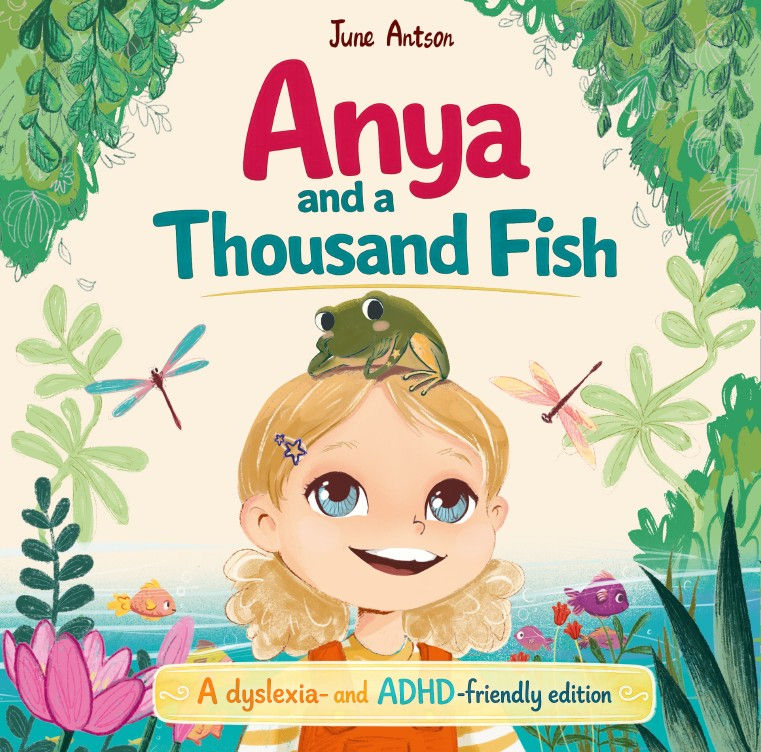
My work in language education, children’s books and accessible reading increasingly belongs to the same body of thought rather than sitting in separate professional compartments.
The questions I am asking have become more precise, the work behind them has become deeper, and I feel far more confident presenting this subject than I would have done a year ago.
Being invited for the second year carries a different kind of satisfaction from receiving the first invitation.
Last year, somebody decided that my work was worth giving a platform to. This time, I can look back at what has developed since then and recognise that I have considerably more to bring to the conversation.
The place feels more earned, the subject feels more clearly mine, and getting invited back feels like evidence that I am progressing.
Now I simply have to work out how to fit all of that into 45 minutes.


Comments