Redefining Children’s Literature: Beautiful Books for Dyslexic Readers

Why Should Dyslexic Children Have Beautiful Books Too?
When it comes to children’s literature, I’ve seen firsthand how much it matters whether a book is designed with the reader in mind.
While teaching Russian as a foreign language, I had a transformative experience:
I worked with three adult students with dyslexia. This opened my eyes to the challenges faced by dyslexic readers and made me think more deeply about accessibility, inclusive children’s books, and how design can support reading.
During that time, I even suggested to an other student that he might be dyslexic. All signs pointed in that direction, and after testing, it was confirmed.
This experience made me reflect on how inclusive books really are, especially for children who read differently.
Creating Inclusive Literature: My Vision
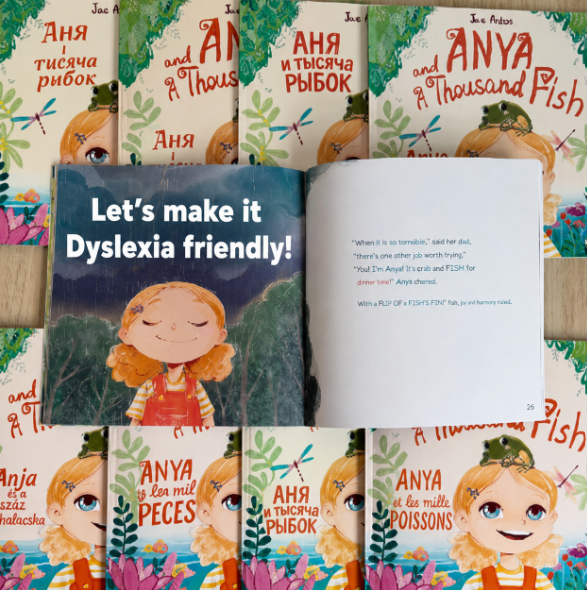
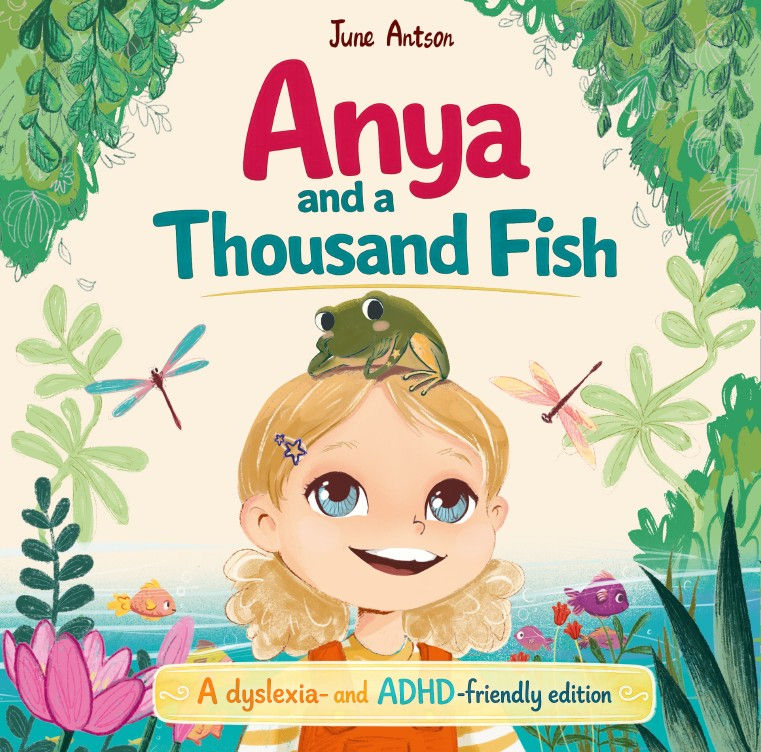
I am on a mission to make my book, Anya and a Thousand Fish, more accessible to children across diverse communities.
While I’m still navigating the best terminology, let’s say I aim to make it more inclusive for everyone, including dyslexic readers, children with reading difficulties, and children who may benefit from a calmer, clearer page.
Here’s how I plan to make it more dyslexia-friendly:
Change the font and spacing to enhance readability
Simplify the text with shorter lines for easier comprehension
Alter the paper quality to make it more appealing and functional
Reduce visual clutter to help children focus on the story
Keep the book beautiful, emotional, and engaging, not just “simplified”
Seeking Support and Collaboration
I’m considering reaching out to organisations focused on dyslexia, both in the Netherlands and abroad, for partnerships or sponsorships.
Perhaps they could:
Assist with distribution costs for libraries
Provide an accessibility grant for adapting the book
Help fund copies for children and families in need
Connect me with teachers, tutors, specialists, or parents who understand dyslexia
Share practical guidance on what makes a children’s book truly dyslexia-friendly
Why This Matters
Creating a dyslexia-friendly version of Anya and a Thousand Fish is not just about changing a font or adjusting line spacing. It is about asking a bigger question: who gets to feel welcome inside a book?
Children who read differently still enjoy rich stories. They also love beautiful illustrations, emotional depth, humour, nature, wonder, and carefully designed pages that support them instead of working against them.
For me, this project is a step towards more inclusive children’s literature, where accessibility does not mean removing beauty, and beauty does not come at the cost of readability.
If books are one of the ways children learn to understand themselves and the world, then every child should have access to books that feel made with them in mind.
Dyslexic children should have beautiful books too.


Comments